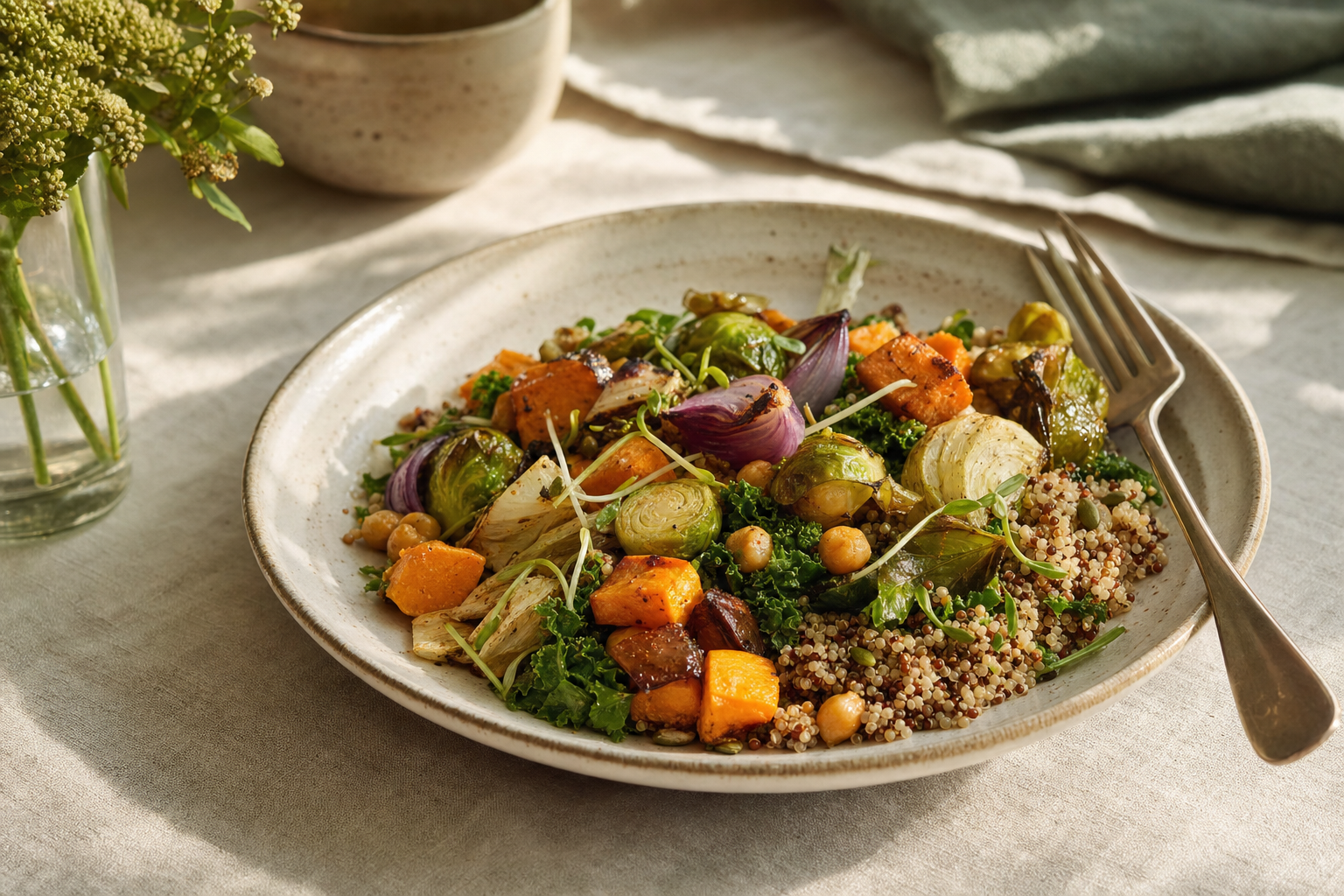
The Benefits of Chewing Your Food: 5 Reasons to Slow Down
Why is chewing thoroughly so often recommended? A research-based look at how chewing affects fullness, digestion, weight, and more.
“Chew your food properly” — most of us heard it growing up. But what does chewing actually do? Here is a research-based look at why slowing down at the table is worth it.
1. It helps you feel full and eat less
Eating slowly gives your brain time to register fullness. Several studies link faster eating with higher food intake, so chewing more can be a simple way to avoid overeating.
2. It supports digestion
Chewing is the first step of digestion. Breaking food into smaller pieces and mixing it with saliva eases the load on your stomach and gut.
3. It can blunt blood-sugar spikes
Eating quickly has been associated with sharper post-meal blood-sugar rises. Chewing slowly may help with glucose control.
4. It makes meals more satisfying
When you actually taste your food, smaller portions feel more satisfying. The goal is for your intake to settle naturally — not through willpower.
5. It’s good for your mouth
Chewing stimulates saliva, which helps keep your mouth’s environment healthy.
The point isn’t to obsess over counting. It’s to build the habit of chewing a little more slowly than usual.
For a concrete chew-count guideline, see how many times should you chew; for making it a habit, how to chew more; for the blood-sugar angle, eating speed and blood-sugar spikes; and for fullness hormones, GLP-1 and how you eat.
Start with your next meal: take one bite, and really taste it.
Sources
- Miquel-Kergoat S, et al. “Effects of chewing on appetite, food intake and gut hormones: a systematic review and meta-analysis.” Physiol Behav. 2015. PubMed
- Cleveland Clinic — Overeating